


The Legend Lives: Bring Bigfoot to Life with the Sasquatch HD Studios Costume
Updated October 2, 2026.
A shape pauses beyond the cabin door. Visitors see the fur first, then the face turns toward them. That is the appeal of a Bigfoot character: the scene can begin with a glimpse and build toward a full reveal. The Horror Dome’s Sasquatch HD Studios Costume gives home haunters, performers and horror fans a complete creature to build that moment around.
This guide covers the featured Sasquatch costume’s listed components and ways to use it in a planned Halloween scene, photo setup or performance. The setting and movements below are creative suggestions you can adapt to your space.
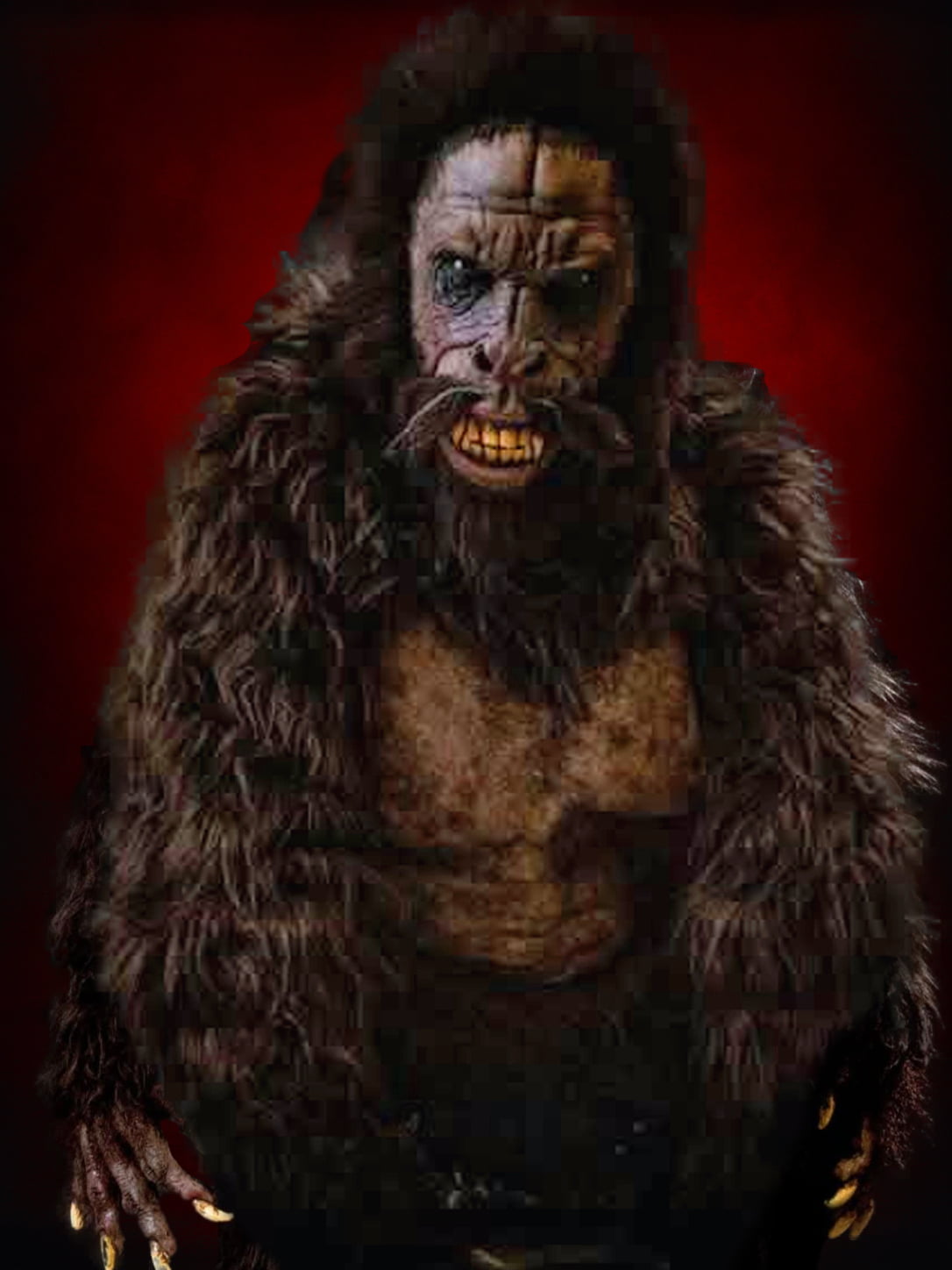
What is included with the Sasquatch HD Studios Costume?
The product listing identifies three core components:
- An overhead mask sculpted by Jordu Schell. The face establishes the creature’s character when visitors get a closer look.
- A full body fur suit. The suit carries the creature’s appearance beyond the head and into the overall silhouette.
- Hand-haired hands and feet. These pieces complete the extremities, which become especially noticeable during a gesture or a full-length photograph.
Plan your scene around those components, then check the current product page for ordering details. If fit, a particular movement or a specific event date will determine your purchase, confirm those requirements with The Horror Dome before ordering. Different Bigfoot and Sasquatch listings have different features, so use the exact product linked here when comparing.
Start with a believable setting
You do not need a large forest set to introduce the character. A small cabin entrance, a ranger-station window or a campsite backdrop can give visitors enough context to understand what they are seeing. Choose one location and repeat a few details that belong there.
For a cabin, that might mean a weathered-looking sign, a lantern-style light and a rough timber backdrop. For a research outpost, use a field notebook and a map as story clues. Place scenery outside the performer’s route so the costume has room to turn and the hands and feet stay clear of obstacles.
Keep the most detailed part of the set close to the reveal point. If you spread props across the entire area, visitors may look away just when the creature appears. A single focal point makes the timing easier to rehearse and gives photographers a clearer composition.
A scene to try: the cabin doorway sighting
Imagine a Halloween attraction with a cabin facade beside a clearly marked guest path. The Sasquatch performer waits within a designated performance area behind the doorway. An angled light catches the edge of the fur while the face remains partly obscured by the set.
- Establish the empty doorway. Let the visitors notice the cabin before introducing movement.
- Reveal a small movement. A controlled head turn or a hand appearing beside the frame can draw attention without a rush toward the audience.
- Show the face. Move to the rehearsed mark where the mask is visible under the scene lighting.
- Hold the image. Give the group a moment to see the full character, then retreat within the performance area and reset.
Rehearse the sequence with a helper standing where guests will be. The helper can tell you whether the face is visible, whether the doorway hides too much of the suit and whether the timing gives each group a clear view. Keep all movement within the event’s performer boundaries and leave the guest route open.
Use light to separate the creature from the background
Fur and a dark woodland backdrop can blend together. Start with one light placed at an angle, then check the outline of the shoulders, head and hands from the audience position. Add only the light needed to reveal the features that matter to your scene.
A bright light aimed straight at the entire set may reveal backstage details along with the costume. Adjust the light and backdrop together until the creature has a clear place in the picture. Keep practical lighting for entrances, exits and walking routes independent of the dramatic effect.
For more ideas on arranging the surrounding set, see how to build a cursed forest Halloween display. Use those scene principles to frame the costume rather than burying it among decorations.
Rehearse in the complete costume
A convincing character depends on controlled movement. Try the mask, suit, hands and feet together before the event. Check how you see the floor and doorway, how the components overlap and how easily you can stop, turn and remove the mask.
Choose movements you can perform comfortably and repeat consistently. A slow turn and a brief pause may suit a distant sighting; a deliberate arm gesture can work for a staged photograph. Plan breaks, use an event helper where appropriate and follow the costume’s care guidance. For outdoor plans, confirm suitable use and care with The Horror Dome rather than assuming the costume can remain exposed to weather.
For a broader performance checklist, read our scare actor guide. The costume provides the appearance; rehearsal gives the character its timing.
Bring the legend into your Halloween story
A strong Sasquatch scene gives visitors a clear progression: an unfamiliar shape, a small movement and a face emerging into view. Build around that sequence, keep the set focused and test the entire moment from the audience’s position.
See the Sasquatch HD Studios Costume for current photographs, product details, price and availability. Then choose the doorway, campsite or woodland encounter that will make the character part of your own Halloween story.


Leave a comment