


How to Be a Scare Actor: 13 Professional Tips for Haunted House Performers
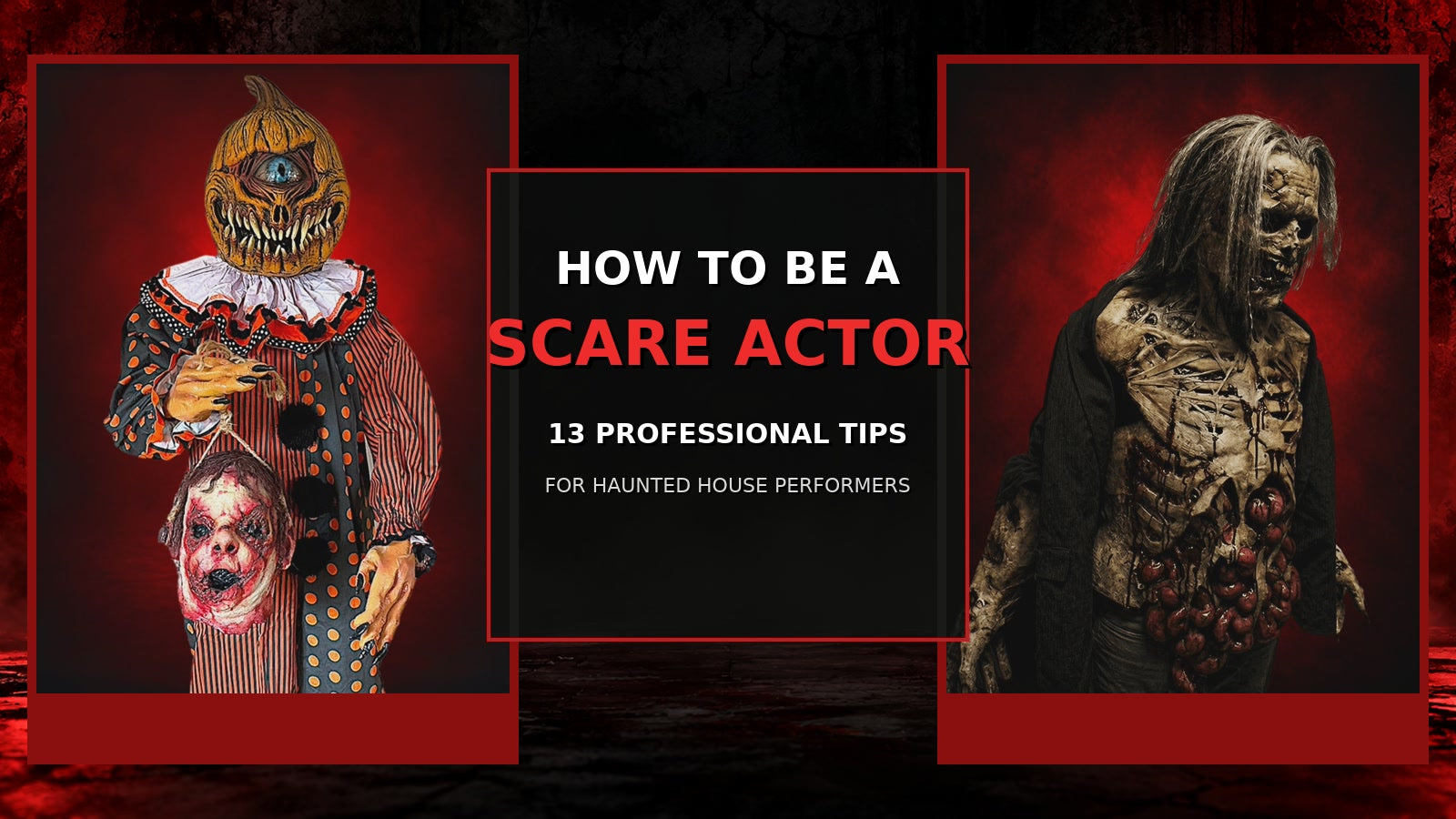
To be a good scare actor, build a clear character, control your movement and timing, read each group, protect your voice, and follow your attraction’s safety rules. The best haunted house actors do more than jump out and scream. They create a believable threat, adapt in seconds, and make every guest feel like the scare was meant for them.
Whether you are preparing for your first audition or sharpening a character you already perform, these 13 scare actor tips will help you create stronger, safer, and more memorable scares.
What Is a Scare Actor?
A scare actor is a performer who plays a frightening character in a haunted house, hayride, theme-park haunt, escape room, or seasonal Halloween event. The job combines improvisation, physical acting, timing, guest interaction, and safety awareness.
Some performers work inside detailed rooms, while others roam through queues or outdoor paths. In either setting, the goal is the same: make the character feel real without putting guests, coworkers, or yourself at risk.
How to Become a Scare Actor
Start by checking local haunted attractions for auditions, open calls, or seasonal hiring notices. Most attractions hire before their Halloween season begins. You may be asked to improvise, show a range of movements or voices, take direction, and demonstrate that you can stay in character.
You do not need years of acting experience to begin. Reliability, energy, awareness, and a willingness to learn often matter just as much. Expect training on house rules, emergency procedures, guest boundaries, scene timing, and how to work with other performers.
1. Choose a Haunted House Character That Fits You
The strongest character is not always the loudest one. Choose a role you can perform repeatedly and convincingly. A fast, aggressive creature may suit a highly physical actor, while a silent stalker can be more effective for someone who excels at stillness and precise movement.
Think about your natural strengths. Are you expressive with your face? Do you have a strong voice? Can you move quietly? Are you comfortable improvising with guests? Build around what you can sustain for an entire shift.
2. Build the Character Before Choosing the Costume
Give your character a simple internal story. What happened to them? What do they want from the people entering their space? How do they stand when no one is watching? You do not need a full screenplay. A few clear choices will keep your reactions consistent.
Then choose a look that reinforces those choices. Browse haunted house costumes and professional Halloween costumes for silhouettes that match the role rather than forcing a performance around the first costume you see.
3. Use Movement and Body Language to Create Fear
Guests often see your outline before they hear you. Use posture, speed, and direction to make that first impression count. A crooked shoulder, a slow head turn, or an unnatural pause can create more tension than constant motion.
Change your rhythm. Move slowly enough to build anticipation, then make one sharp, controlled action. Practice in costume so you know how fabric, gloves, masks, and footwear affect your range of motion. Keep every movement controlled and within your attraction’s rules.
4. Time the Scare Without Becoming Predictable
A good scare lands when the guest’s attention is somewhere else. Let lighting, a prop, a sound cue, or another actor draw their focus. Enter on the beat they do not expect.
Avoid repeating the same count for every group. Guests may hear the group ahead of them and anticipate your move. Change your position, delay, or angle when the scene allows it. The goal is not simply to appear; it is to interrupt the guest’s expectation.
5. Use Your Voice Without Damaging It
You do not need to scream at full volume all night. Low speech, broken whispers, laughter, breathing, and short character phrases can be more unsettling—and easier to sustain.
Warm up before your shift, drink water, and use supported breath rather than forcing sound from your throat. If a voice hurts, stop using it. Build two or three vocal options so you can change intensity while staying in character.
6. Let the Costume Do Part of the Acting
A professional costume should create a readable silhouette and give guests an immediate clue about the threat. Once the look communicates the basic idea, your acting can add personality and surprise.
The Pumpkin Watcher HD Studios Costume, for example, combines a movie-quality pumpkin mask, hand-sewn clown suit with detachable collar, and hand-painted latex hands. That complete design gives a performer an instantly recognizable harvest-horror character to build on.
Before opening night, rehearse in the full outfit. Learn where the costume catches, how far you can reach, what sounds it makes, and whether any accessory changes your balance.
7. Choose a Mask That Allows Visibility and Breathing
A frightening mask only works if you can perform safely in it. Check your sightlines, ventilation, hearing, and fit before entering a scene. Practice turning, crouching, walking through narrow spaces, and locating exits while wearing it.
Explore scary Halloween masks, but select the mask for the job you will actually perform. If visibility is limited, adjust the blocking with your attraction manager instead of guessing where guests are.
8. Work With Lighting, Props, and the Set
Your room is a scene partner. Learn where the shadows fall, which surfaces reflect light, where guests naturally look, and which path they are supposed to follow. A small step into the right light can reveal a character more effectively than a large movement in the wrong place.
Use only approved props, and know their safe range. Never swing an object blindly or block an exit. If your scene includes moving effects, doors, platforms, or animatronics, coordinate your timing with the operator and other actors.
9. Read Each Group Before You Scare
Every group is different. Watch their pace, eye line, and body language. The person talking loudly may be covering nervousness. The quiet guest may be watching every hiding place. Children, older adults, and guests with mobility needs may require a different approach.
Adjust the intensity without dropping the character. Good scare acting is responsive. You are trying to give the group a thrilling experience, not prove how far you can push them.
10. Use Stillness as a Weapon
Stillness makes guests question what they are seeing. Hold a pose long enough to be mistaken for a prop, then use a small head movement or a sudden change in posture. This is especially effective in scenes filled with figures, mannequins, or visual clutter.
Do not break the illusion by fidgeting. Find a balanced stance you can hold comfortably, keep breathing controlled, and decide exactly which movement will reveal that you are alive.
11. Follow Safety and Touching Rules
Never assume physical contact is allowed. Many attractions use a strict no-touch policy; others train specific performers for controlled interactions. Follow the rules of your venue exactly.
Keep escape routes clear, maintain safe distance from guests, and know the signal for stopping a scene. If someone falls, becomes distressed, or needs help, switch from performance to the attraction’s safety procedure immediately. A professional scare actor protects the show by protecting the people in it.
12. Stay in Character Between Scares
Guests notice more than the main scare. They may see you resetting, watching another group, or moving to a new position. Decide how your character waits, listens, and recovers so the illusion continues through the entire scene.
A strong reset also prepares you for the next group. Return props to their marks, check your path, take one controlled breath, and listen for the next cue.
13. Build a Look You Can Perform All Night
The most elaborate design is useless if it stops you from moving, seeing, or staying in character. Test the full look for heat, weight, visibility, range of motion, and quick repairs. Secure loose pieces and keep venue-approved backup supplies nearby.
A modular costume can make fitting and movement easier. The Zombie Lurker HD Studios Pro Costume uses a hand-painted studio-quality mask with an attached chest and studio hands, while the wearer supplies the clothing. That lets the performer finish the character with garments suited to the role and working environment.
For more character directions, explore scary clown costumes and zombie costumes.
Common Scare Actor Mistakes
- Screaming at every group: It becomes predictable and strains your voice.
- Breaking character after the first scare: Guests may turn around or continue watching.
- Ignoring sightlines: A great move fails if no one can see it.
- Getting too close: Intensity never replaces safe spacing and venue rules.
- Choosing a costume without rehearsing in it: Visibility and movement problems should be solved before opening.
- Using the same tactic all night: Adapt timing and energy to the room and the group.
Frequently Asked Questions About Scare Acting
Do you need acting experience to be a scare actor?
Not always. Many haunted attractions train beginners. Being dependable, coachable, physically aware, and comfortable improvising can be more important than having a long résumé.
How old do you have to be to work as a scare actor?
Minimum age requirements vary by attraction and local employment rules. Check the specific audition or job listing before applying.
Are scare actors allowed to touch guests?
Only if the attraction explicitly permits it and trains performers to do it. Never touch a guest unless your venue’s rules and your assigned role clearly allow that contact.
How much do haunted house actors get paid?
Pay varies by attraction, location, experience, role, and whether the work is hourly, nightly, or contract-based. Review the employer’s listing and ask about rehearsal, costume, and performance pay during hiring.
How can a scare actor protect their voice?
Warm up, hydrate, use breath support, vary your sounds, and avoid forcing painful screams. Tell a supervisor if your assigned voice is causing strain.
What should a beginner practice first?
Practice posture, stillness, one controlled reveal, one short vocal choice, and a safe reset. A simple character performed consistently is more convincing than a complicated character you cannot sustain.
Make the Character Memorable
The best scare actors combine character, timing, awareness, and restraint. Start with a clear idea, rehearse it in costume, learn the room, and stay responsive to every group. When the look and the performance support each other, a quick encounter can become the moment guests remember after the lights come back on.


Leave a comment