


15 Haunted House Room Ideas: Themes, Props and Scare Setups
A strong haunted house room does more than display scary props. It controls what guests see first, where they slow down, and where the scare lands. The best haunted house room ideas use one clear story, a strong focal point, layered light and sound, and a safe route that actors and guests can move through without confusion.
Below are 15 room themes that can work in a home haunt, seasonal event, or professional attraction. Each idea includes a practical setup, a scare position, and ways to build depth with haunted house decorations, props, masks, and animatronics.
How do you plan a haunted house room?
Start with the guest path, not the shopping list. Mark the entrance, exit, actor hiding place, electrical route, and emergency access before placing scenery. Give every room one visual anchor that can be recognized in a second: an operating table, a butcher block, a coffin, a carousel, or a glowing cauldron. Then hide the scare off that focal line so guests look one way while the actor or effect activates from another.
- Protect the walking path: Keep cords, low props, loose fabric, and moving mechanisms out of the guest lane.
- Control the sightline: Use a curtain, angled wall, doorway, or tall prop so the entire room is not revealed at once.
- Build in layers: Combine foreground detail, a central focal prop, and a dim background silhouette.
- Plan the reset: Actors need a route back to their mark without crossing the next group.
- Test the timing: Walk the room at guest speed and adjust sensors, sound cues, and actor beats.
15 haunted house room ideas
1. Abandoned asylum intake room
Build the story around a failed admission desk: patient files, numbered wristbands, a flickering lamp, and a wheelchair facing the wrong direction. Cold white or green light makes the space feel clinical. Place an actor behind a privacy curtain or observation window rather than in the obvious chair. A distant intercom loop can announce patient numbers, while a short burst of metal-on-metal sound signals the scare.
2. Alien autopsy laboratory
Use clear plastic sheeting, stainless-look surfaces, specimen labels, blue-white work lights, and a pulsing alarm to turn an ordinary room into a containment lab. The Autopsy Alien Visitor Professional Halloween Prop stands over four feet tall, has poseable arms and fingers, and is made from polyurethane foam and rubber with a removable steel base. It is currently described as a made-to-order piece, so check the live lead time before building your schedule around it.
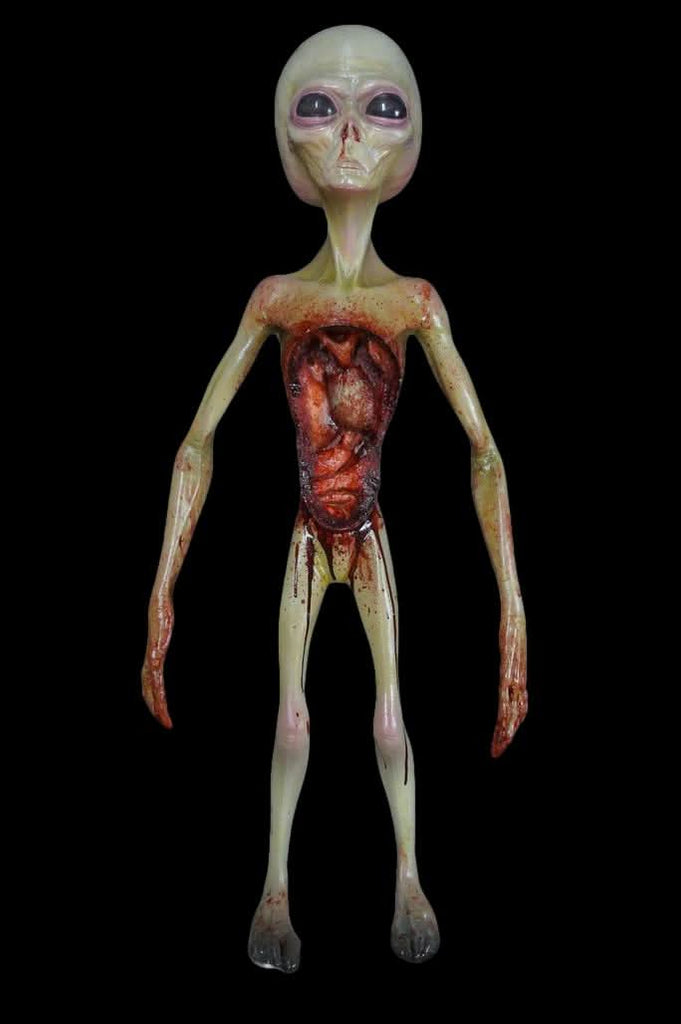
Make the alien the first thing guests see, then place the live scare behind them at a clipboard station or quarantine door. Avoid aiming strobes directly at eye level, and give guests a clear route around tables and cables.
3. Haunted carnival midway
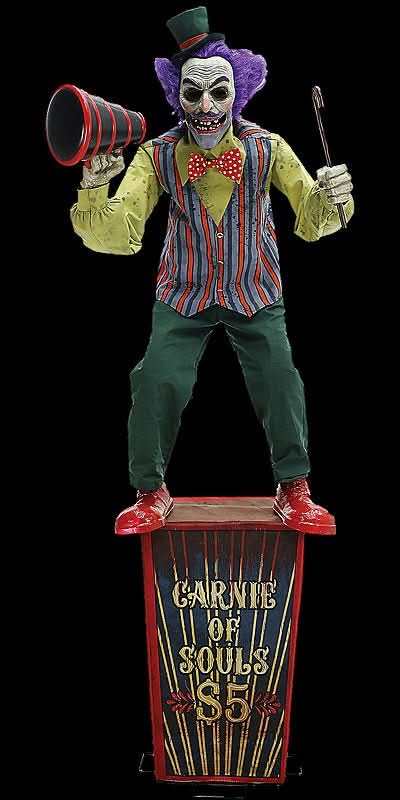
Hang faded pennants, crooked game signs, striped fabric, and warm bulbs to create a carnival that feels almost cheerful. Then disrupt the mood with warped calliope music and a figure that controls the room. The 6' Carnival Barker Halloween Animatronic Decoration uses blinking Digi-Eyes™, a moving mouth, a turning head, pivoting waist, moving arms, creepy phrases, and carnival music. Put it at the far end as the visual anchor and hide an actor at a game booth along the side wall.
4. Morgue and cold storage
A morgue scene works through repetition: numbered drawers, covered forms, toe tags, stainless-look trays, and the low hum of refrigeration. Keep most of the room still. One slowly moving sheet or a single drawer that appears partly open is more effective than constant motion everywhere. Position the actor as an attendant who gives guests instructions, then breaks character after they have committed to the room.
5. Cannibal butcher shop
Frame the room as a working meat counter, not a random collection of gore. Use butcher paper, hooks placed safely above reach, handwritten prices, worn aprons, and red task lighting. The Pig Head Butcher Professional Full Body Halloween Prop is a life-size, hand-painted figure with a foam-filled latex core body, thick latex head and hands, and a welded steel base. The product is made to order, so confirm the current production estimate before purchase.
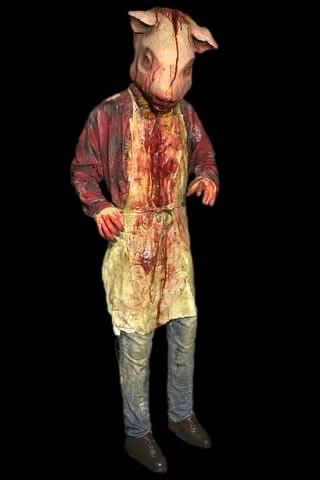
Let the static butcher draw attention while a live actor works from behind a hanging partition. Keep every prop weapon secured and keep sharp, breakable, or swinging items completely outside the guest path.
6. Cemetery and ruined crypt
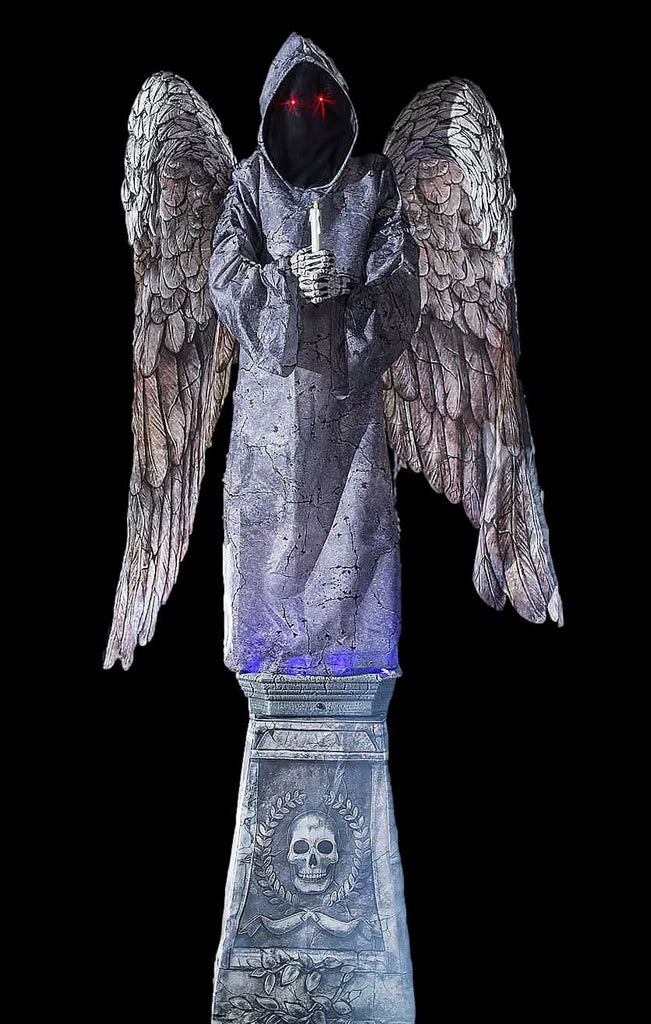
Create depth with staggered tombstones, low blue light, dead vines, and fog kept close to the floor. The Cemetery Angel Halloween Animatronic stands 96 inches tall and appears like a weathered statue until its red LED eyes light, its wings move, and it speaks. A flickering candle and purple uplight are built into the presentation. The product page recommends indoor use, an important detail when planning a yard or covered walkthrough.
7. Mad scientist specimen room
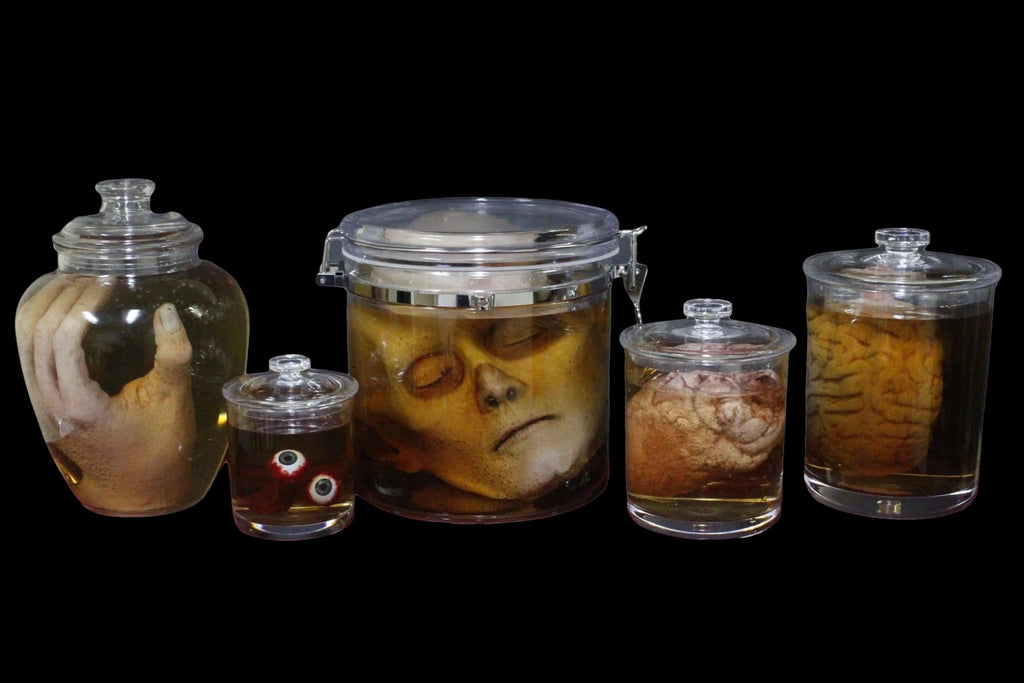
Fill shelves with labeled jars, old notebooks, coils of tubing, clipboards, and UV-reactive details. The Body Part Specimen Jar Halloween Prop Combo includes shatterproof acrylic jars with rubber brain, heart, hand, face, and eye pieces, plus concentrated dye for amber or blacklight-reactive displays. It is listed as made to order, so review the live production window first. Keep jars stable and away from edges where guests can bump them.
8. Possessed nursery and doll room
Build this room around innocence that has gone wrong: a crib, hand-drawn family portraits, music-box audio, blocks spelling an unsettling message, and dolls that all face the entrance. The Ghostly Go Round – Creepy Dolls Halloween Animatronic Decoration is a six-foot animated merry-go-round with three cracked Victorian-style dolls, slow rotation, carousel music, and sensor, steady-on, or step-pad activation.
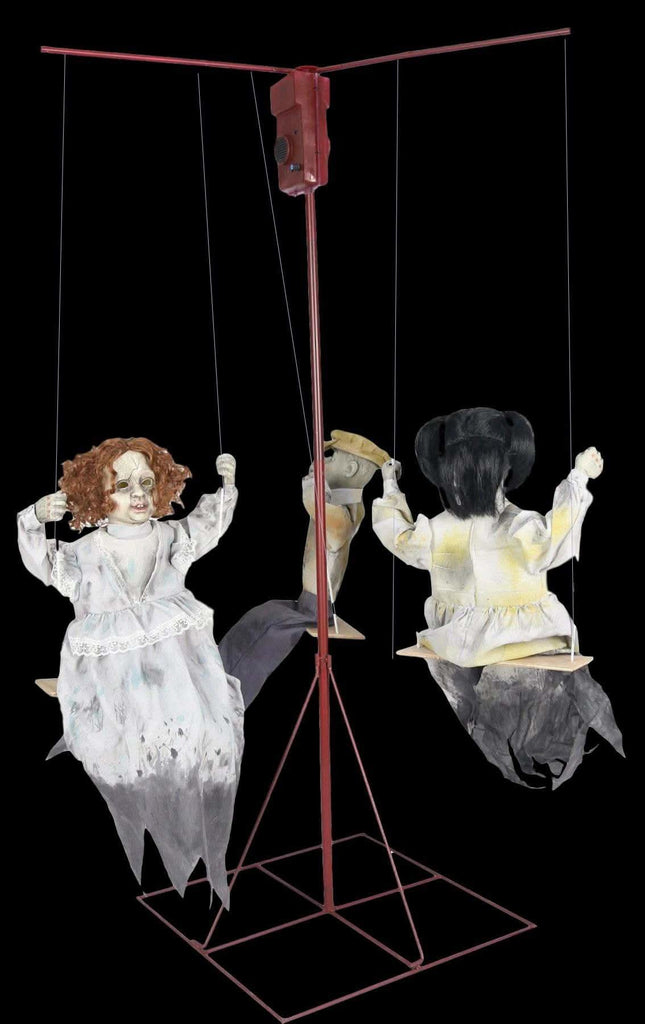
Give any rotating prop its full operating clearance and use a physical barrier so guests cannot enter the mechanism’s footprint. A still actor posed among the dolls can deliver the second scare after the carousel draws attention.
9. Swamp witch shack
Layer moss, warped wood, hanging herbs, lantern light, animal bones, and low fog around a central cauldron. Use bubbling audio close to the pot and distant insects or frogs around the room perimeter. Green uplight should illuminate the brew without washing the whole set. Place the actor just beyond the cauldron’s glow so guests notice the silhouette only after they step inside.
10. Cursed crypt cauldron
For a supernatural crypt, mix carved-stone textures with ritual markings and a single animated centerpiece. The Light-Up Skeleton Stirring Cauldron Halloween Animatronic Decoration stands 79 inches tall, uses an infrared sensor, stirs its cauldron, lifts its head, reveals glowing eyes, and plays a chilling laugh. The current product description specifies indoor use, so plan weather protection accordingly.

11. Zombie containment checkpoint
Turn exposed utility details into part of the story with hazard tape, plastic sheeting, warning lights, specimen bags, and an emergency radio loop. Split the room into “clean” and “infected” zones, then let an actor in protective gear inspect each group. The scare can come from a breached curtain or cage after the inspection focuses everyone forward. Browse zombie props and zombie costumes to keep the character design consistent.
12. Vampire dining room
Use a long table, tarnished serving pieces, tall candles, dark red fabric, family portraits, and one empty chair at the head. Keep the scene formal and symmetrical so a sudden break in that order feels wrong. Hide the vampire in plain sight as a motionless dinner guest. If using real candles is prohibited or unsafe, use flickering LED alternatives and route all cords beneath secured covers outside the walking lane.
13. Séance parlor
A small room can feel complete with a round table, spirit board, layered rugs, framed portraits, veiled lamps, and whispered audio that seems to move around the walls. Keep the center table low enough to preserve sightlines. Trigger one effect first—a moving planchette, a knock, or a light change—then let the actor appear from a cabinet or curtained corner while guests are focused on the table.
14. Cryptid hunter’s cabin
Cover the walls with maps, footprint casts, blurry photographs, marked calendars, and field notes. Add a radio report or wildlife recording, then place a large silhouette beyond a false window. This theme is especially effective when the monster is withheld until the end. A performer using a creature look from the haunted house masks collection can cross the exit sightline just before the group leaves.
15. Haunted harvest cellar
Stack crates, burlap sacks, dried cornstalks, and pumpkins around a narrow cellar path. Amber light makes the room feel warm at first; a hidden green or red accent can reveal the threat. Use one especially distinctive pumpkin figure as the focal point, then place a live actor low beside a crate or behind a hanging burlap screen. Keep straw and fabric away from hot fixtures, power supplies, and moving mechanisms.
How do you make a haunted house room scarier?
Restraint usually creates more tension than filling every surface. Let guests understand the room before the scare interrupts it. Use sound to suggest activity outside the visible space, and vary the rhythm: one room can be slow and atmospheric, the next fast and physical. If every effect screams, flashes, and moves at once, guests stop knowing where to look.
Actors should also have a specific objective. A nurse checks wristbands, a scientist protects a specimen, a butcher guards the counter, and a carnival barker invites guests to play. A clear role gives the performer something to do before the scare and makes the scene feel like a place rather than a photo backdrop. For more performance planning, see How to Be a Scare Actor: 13 Professional Tips and 15 Scare Actor Costume Ideas for Haunted Houses.
Final haunted room safety check
Before opening, test the full route with the room lights and effects running. Secure scenery against tipping, maintain required exits and clearances, protect electrical connections, verify that fog and strobes are allowed, and follow local fire and occupancy rules. Animatronics need their stated movement clearance and a barrier where guests could reach the mechanism. Keep a fast way to stop effects and bring up work lights if a guest needs help.
Ready to build your next scene? Explore haunted house props, Halloween animatronics, haunted lighting, and haunted house actor gear from The Horror Dome.


Leave a comment