


Mummy Tomb Ideas for a Haunted House
A mummy tomb scene can tell its story before anyone speaks. An opened chamber, a disturbed display, and a bandaged figure suggest that visitors have arrived after something has gone wrong. The reveal works when guests first accept the figure as part of the room, then notice it waking.
Keep the setting fictional and give it one clear event: an expedition opened a chamber that should have remained sealed. That premise supports a small home haunt as well as a room in a larger Halloween attraction. The following layout uses a live performer, a mummy mask, and scenery designed around the guest route.
Choose what visitors have disturbed
Begin with a visible clue. An empty display stand, a tilted expedition sign, or a notebook opened to an unfinished entry can suggest the discovery. Make the clue large enough to recognize from the path; it should not require guests to handle anything.
One useful scene is “the missing artifact.” Visitors see an empty display with a short label, then look toward the bandaged guardian beside it. Another is “the opened chamber,” with a scenic doorway framing the actor. Pick one. Combining a treasure hunt, a curse, a lost expedition, and a chase in the same small room can make the action hard to follow.
Start the character with The Mummy mask
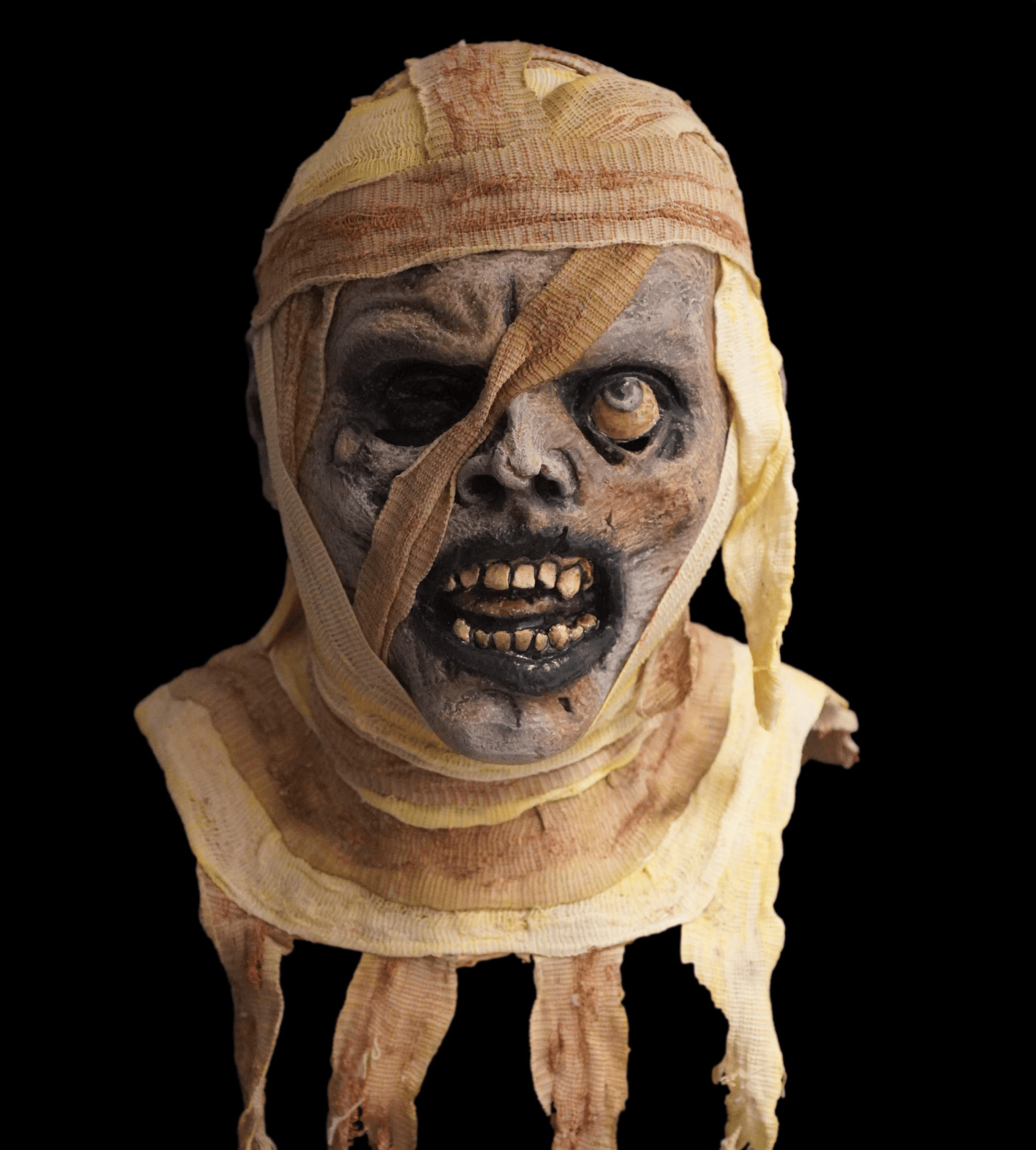
The Mummy HD Studios Pro Halloween Mask is an overhead mask with painted details and real bandages. It gives the character a specific face and texture that should remain visible when you plan the costume and lighting.
This product is a mask. Build the rest of your actor's look separately, selecting clothing, gloves, and other costume pieces appropriate to the performer and the scene. A muted, aged-looking palette can connect the mask to the outfit without requiring every surface to have exactly the same color.
Secure any added costume strips so they cannot trail into the walking route or interfere with the performer's hands and feet. Test the finished outfit through the exact head turn, step, and return movement you expect during the show. An attractive still pose is only the beginning of a workable actor costume.
Frame the mummy without trapping the performer
A shallow scenic alcove can suggest a chamber while leaving the actor room to enter and leave. Position it beside the route, with a clear boundary between the performance area and the guests. The mummy can turn or take one rehearsed step within that area without blocking the way onward.
Use scenery built and secured for its intended setting. Large stone-like shapes and a simple doorway silhouette usually communicate a tomb more clearly than piles of small loose decorations. Keep scenic rubble, hanging fabric, and cables out of the walking route.
Do not make the effect depend on enclosing a performer inside a sealed box or a structure they cannot exit easily. If your scene uses a sarcophagus-shaped facade, design it as scenery with appropriate access and clearance. The audience only needs enough of the shape to understand the story.
Use light to reveal the bandages
Look at the mask from the guest approach with your scene lighting on. A light from slightly to the side can help show the bandage texture, but the useful angle depends on your room. Move the light during rehearsal and compare what visitors actually see.
Keep a difference between the figure and its background. A pale costume against a similarly pale wall may disappear into a flat shape. A darker recess behind the performer can make the silhouette easier to recognize without requiring a more elaborate lighting system.
Use appropriate lighting equipment according to its instructions, and keep the route visible. You can suggest torchlight with suitable electric effects; this scene does not require an open flame.
Build the awakening in three movements
Start with the head angled slightly away from the entering group. Once visitors reach the clue, the mummy turns toward them. A hand lifts. Then the performer takes one controlled step inside the marked performance area. That sequence gives the audience time to understand what has changed.
Try the same sequence without a sound effect first. If volunteers miss the face or the movement, revise the lighting and sightline. Once the action reads clearly, a brief stone scrape or low atmospheric cue can support it. Avoid making the actor compensate for an unclear setup by reaching farther into the route.
Give the performer a shortened version for a fast-moving group: head turn, hand movement, return. A long awakening is not useful if visitors have already reached the next room.
Connect the props with a few repeated details
Use the same fictional expedition name on the notebook and one wall label. Repeat a simple symbol on a scenic panel and the empty display. These connections make the room feel intentional without presenting invented details as authentic history.
If your haunt has several rooms, use a transition at the exit: a damaged expedition crate can lead toward another discovery, or a final warning sign can finish the tomb story. For a contrasting creature room, explore our mad scientist laboratory ideas.
Test the room with the next group already waiting
Rehearse the return to the starting pose, not only the awakening. Make sure the actor can reset before another group sees the alcove, and agree on a crew signal when more time is needed. Check costume attachments, visibility, and the guest route again after the first practice runs.
A focused tomb scene gives The Mummy mask room to do its work: first as an unsettling face in an ancient-looking chamber, then as a character that has noticed the visitors. Keep the story readable and the performance repeatable as Halloween approaches.


Leave a comment